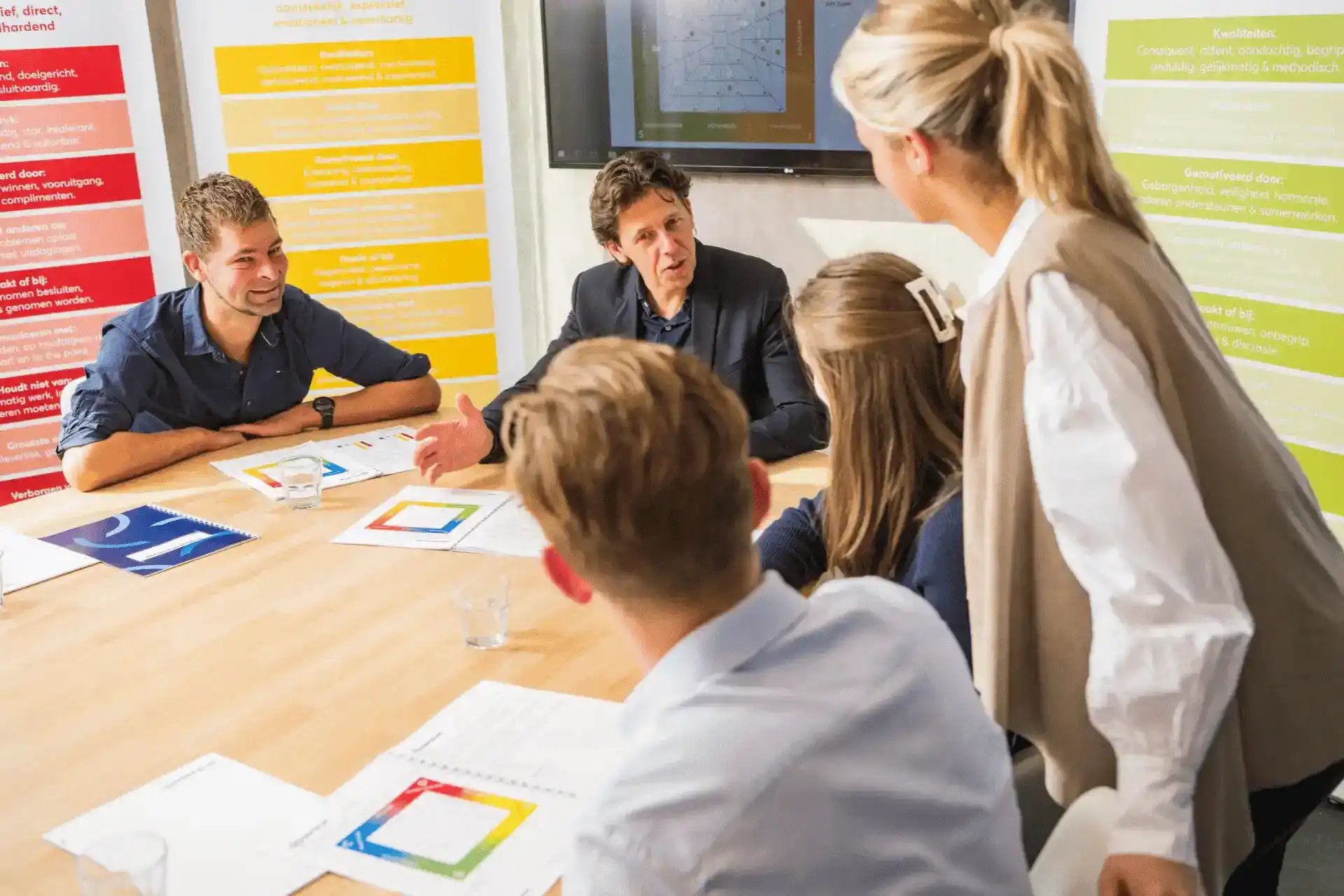
Coaching is a goal-oriented guidance process in which an individual works on personal or professional development. The coach helps the coachee to examine situations, recognise patterns and discover new possibilities.
A coaching programme begins with a specific development question. From there, we explore the behaviour the individual exhibits, what helps or hinders this behaviour, and what alternative behaviour is better suited to the desired outcome.
Effective coaching requires trust, openness and a willingness to reflect and practise. By consistently linking insights to real-life situations, the coachee can try out new choices and gradually expand their repertoire of actions. Behavioural change usually does not occur in a single session, but develops through insight, practice, feedback and reflection.


Many professionals have a general idea of what they would like to do differently, but do not always succeed in making structural changes to their behaviour.
This is not necessarily down to a lack of motivation or commitment. Behavioural patterns are often developed over a long period and are reinforced by beliefs, past experiences, automatic reactions and the expectations of those around them.
Sometimes, a person is not sufficiently aware of their own role in the matter. In other situations, the desired behaviour is clear, but there is a lack of concrete alternatives, opportunities to practise or support from the work environment. A coaching question that remains too general can also result in a development programme lacking sufficient direction.
Insight into behavioural preferences and motivators can help to better understand patterns. For genuine development, however, it is also necessary for these insights to be linked to a specific issue, realistic goals and real-life situations.












How do DISC and motivators help in coaching?
DISC and motivators provide a concrete and personalised starting point for coaching.
A DISC assessment reveals the behavioural and communication preferences a person exhibits. How does a person take the initiative? How do they respond to others, change or pressure? Which qualities are readily utilised, and where might potential pitfalls arise?
The profile offers recognisable points of reference for exploring behaviour. This is not about a fixed judgement, but about how certain preferences manifest themselves in different situations and what effect this has.
Motivators add the motivational layer to this. What does a person find important? Which tasks and circumstances provide energy? Where does their attention naturally turn? And which values or needs play a part in their choices and reactions?
By linking DISC and motivators, a broader picture emerges of observable behaviour and the motivation that may influence it. This makes it possible to investigate more specifically which behaviours a person wishes to retain, which behaviours are less effective, and which alternatives can be developed.
The profiles serve as a tool within the coaching process. The coaching question, personal context, working environment and experiences of the coachee always remain the guiding factors.


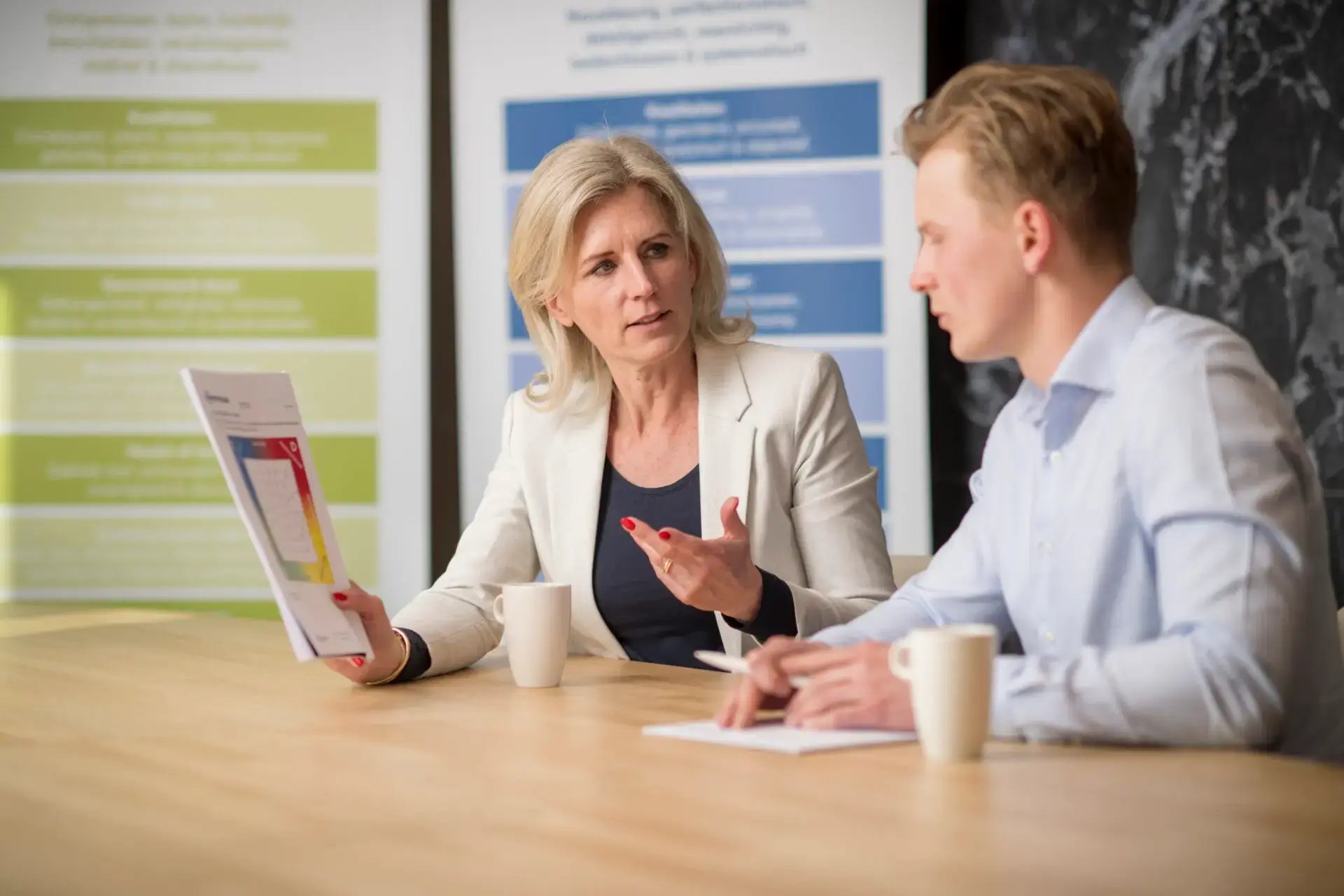
From insight to lasting behavioural change
Coaching using DISC and motivators goes beyond mere awareness. Insight only becomes valuable when the coachee can translate it into concrete behaviour in situations that matter.
Using DISC and motivators, coaching can help you work on:
Sustainable development requires small, achievable steps. The coachee explores which behaviour might be more effective in a specific situation, tries it out and then reflects on the outcome.
The wider environment can also play an important role. A manager, client or colleague can provide opportunities to practise, offer feedback and support the coachee in sticking to agreed commitments. Particularly when coaching takes place within an organisation, it helps to clarify in advance what the coachee, the coach and the organisation will each contribute to the process.
By combining insight, practice, feedback and support, there is a greater chance that new behaviour will continue to be evident even after the coaching programme has ended.

Would you like to deepen your coaching or provide it with a concrete and well-founded starting point? Then DISC and motivators can help to shed light on behavioural preferences, motivation and development questions.
A DISC assessment and motivator profile provide practical information on how someone communicates, what behaviour emerges in different situations, and what motivates them. These insights help to deepen the coaching enquiry, formulate development goals more concretely, and select targeted behavioural experiments.
In this way, coaching becomes a conscious and goal-oriented development process in which personal insight is linked to specific behaviour, day-to-day practice and the context in which a person operates.

Gain insight into behavioral styles, communication preferences, strengths, pitfalls and how someone comes across to others.
→ Read more



Discover what drives people with a motivators assessment. Learn what motivates someone and uncover the engine behind their behavior.
→ Read more



Organisations that wish to continue to perform well, invest in the engagement of their employees.

-225.jpg_compressed.webp?width=1920&height=1280&name=HRMprofielen%20(22maart2022)-225.jpg_compressed.webp)
High-performing teams form the foundation of a successful organisation. For teams that achieve lasting results.

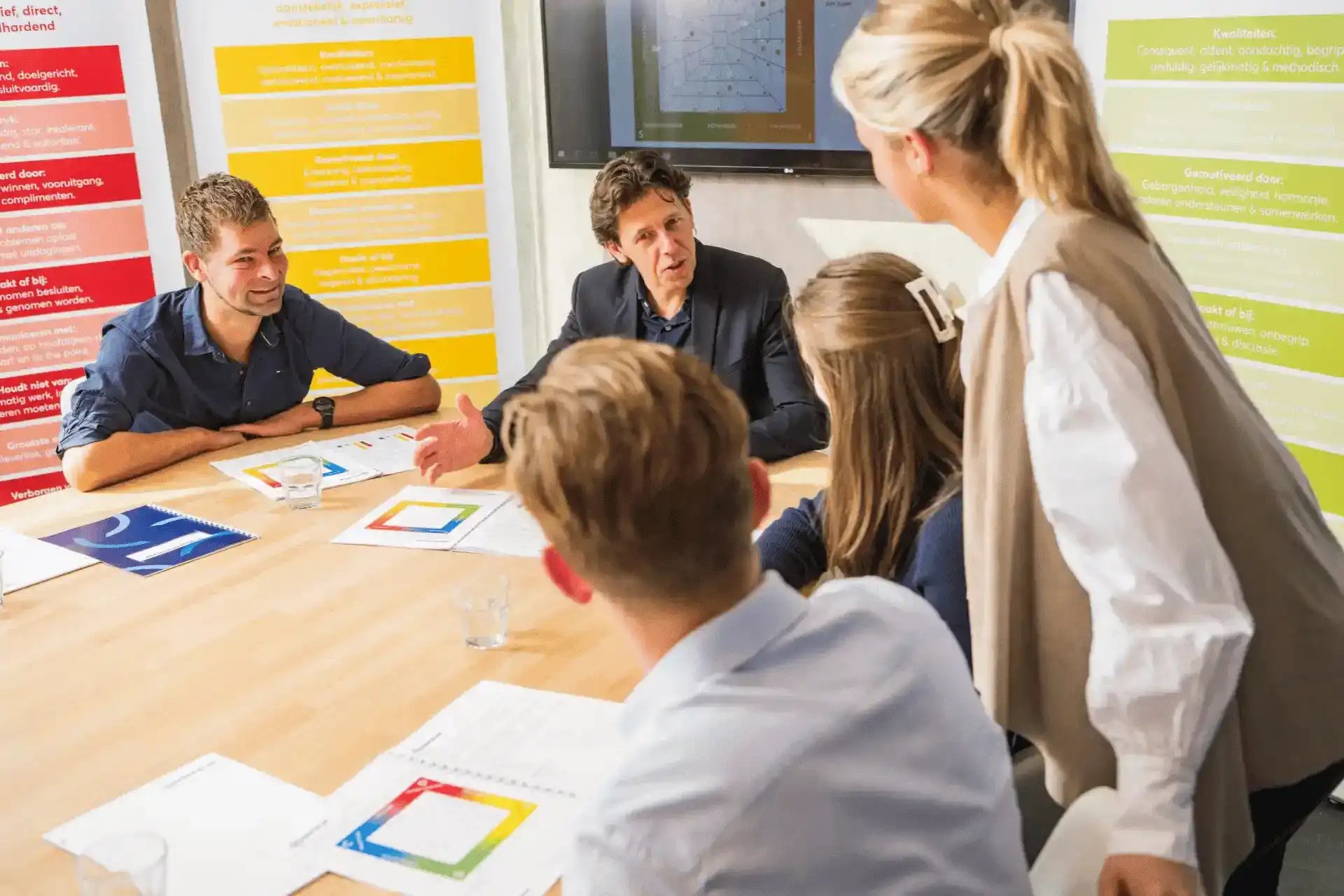
Organisations that wish to remain relevant and continually adapt to changing circumstances invest in leadership development.