Professional sales go beyond simply presenting a product or service well. They require the ability to understand what a customer wants to achieve, what factors are at play and what is needed to reach an appropriate decision.


A sales professional or adviser must not only be knowledgeable about the subject matter but also be able to communicate flexibly. One client may want to get straight to the point, whilst another may first want to build trust, discuss various options or require a thorough justification.
The DISC model offers a practical framework for recognising observable behaviour, carefully assessing observations and more consciously tailoring one’s own communication to the client and the situation. In this way, DISC supports professional conversation skills, without reducing behaviour to a fixed client type.


An effective sales conversation does not begin with persuasion, but with exploration.
What does the customer want to achieve? What problem needs solving? What criteria are important in making a choice? Who is involved in the decision? And what information does the customer need to be able to take the next step?
The content of the conversation is important, but so is the way in which it is presented. Some customers want a fast pace and a clear outcome. Others need personal contact, an overview, reassurance or a deeper understanding of the subject matter.
DISC helps sales professionals to be more mindful of cues in language use, pace, questioning and decision-making. Based on this, communication can be adapted in terms of:
By carefully tailoring communication, the customer can properly process, compare and assess the relevant information. This supports well-considered decision-making.











Establishing a good connection starts with understanding your own behaviour.
Every sales professional has a preferred style. Some move quickly towards a solution and focus on results. Others build the relationship first, think aloud with the client or want to conduct a thorough assessment of the issue before making a proposal.
A DISC assessment reveals:
For example, a decisive adviser may rush to the solution too quickly. An enthusiastic sales professional may identify many opportunities but offer too little structure. Someone with a calm style may spend too long aligning their approach, whilst an analytical conversation partner may provide more information than the client needs.
Self-awareness helps you to recognise these automatic patterns and make more conscious choices about which approach suits the client and the situation.


Recognising your client’s DISC style
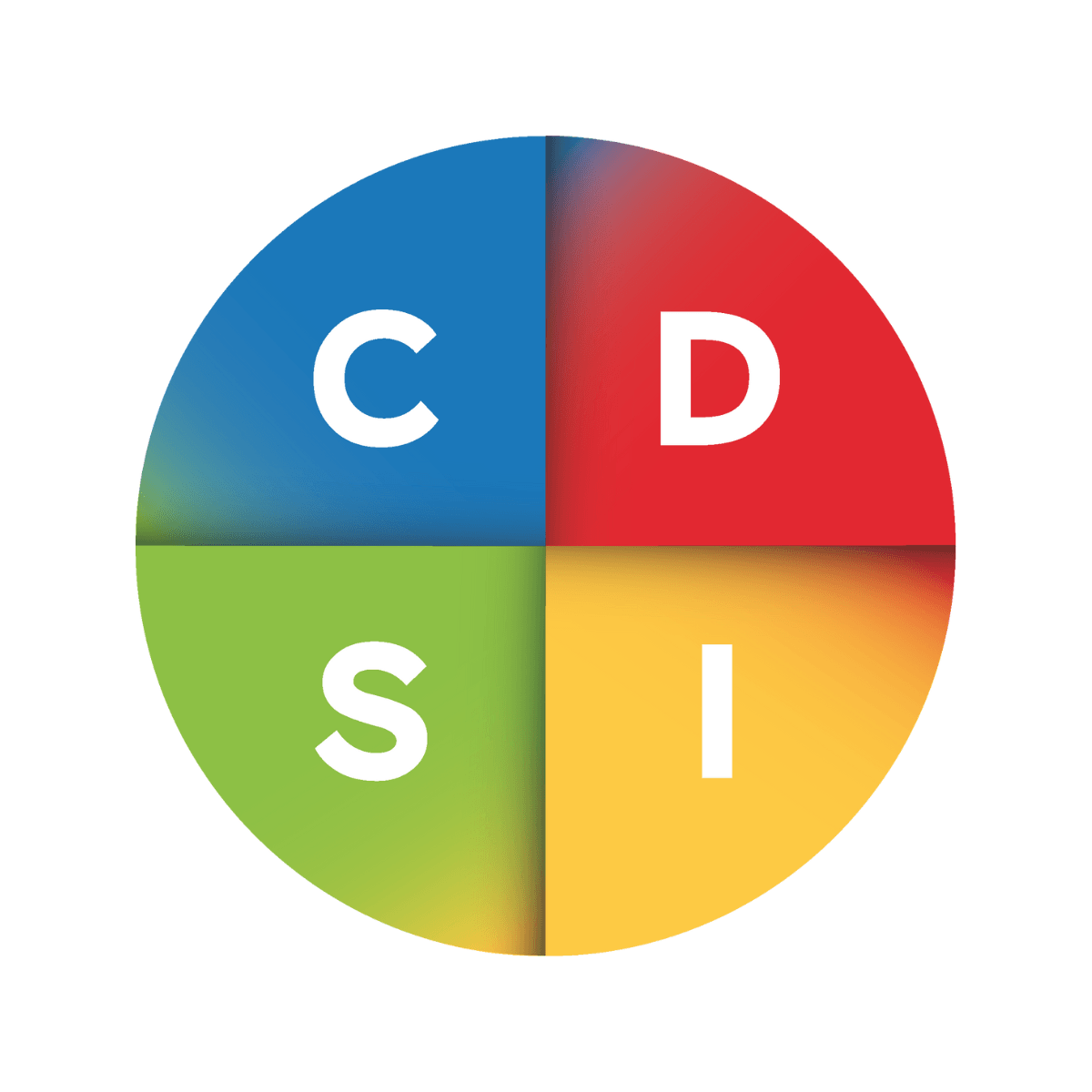
Every client displays their own unique combination of the four DISC behavioural styles. Depending on the situation, the topic and the pressure they are under, different behaviours may come to the fore.
It is therefore neither necessary nor desirable to definitively classify someone as a D, I, S or C style during a conversation. The key is to recognise the behaviour that is visible at that moment.
You can look out for, amongst other things:

Aligning with the D-style in sales
Clients who display a lot of D-style behaviour often communicate directly, in a results-oriented manner and at a fast pace. They generally want to quickly understand what a proposal will deliver and how much influence they have on the outcome.
In a sales conversation, it helps to:
Customers who display a lot of ‘I’ behaviour often communicate enthusiastically, spontaneously and interactively. They are drawn to opportunities, ideas and personal contact.
In a sales conversation, it helps to:
Enthusiasm can generate a lot of momentum, but must not come at the expense of clarity. Therefore, carefully document agreements, responsibilities and next steps.


Clients who display a lot of S-style behaviour often value calmness, reliability and a carefully nurtured relationship. They want to know what a proposal means for day-to-day operations and for the people who will be working with it.
In a sales conversation, it helps to:
Clients who display a lot of C-style behaviour often value quality, accuracy and a thorough rationale. They want to understand what a proposal is based on and what conditions, risks and limitations are involved.
In a sales meeting, it helps to:
In een salesgesprek helpt het om:
Try not to rush a client exhibiting a lot of C-type behaviour by omitting details. Work together to determine what information is needed to reach a well-informed decision.

DISC provides insight into the way a client communicates and behaves during the conversation. However, it does not automatically reveal what motivates someone at a deeper level or what interests underlie a decision.
Motivators therefore add another layer. They relate to what someone considers important and what they value. Think of knowledge and evidence, practical results, autonomy, collaboration, harmony or clear principles.
In a sales conversation, you cannot deduce motivators solely from behaviour. To do so, you need to ask questions, such as:


Do you want to conduct sales conversations more effectively and better tailor your approach to different customers? Then DISC helps you to look more consciously at observable behaviour and tailor your communication accordingly.
A DISC assessment gives you insight into your own behavioural and communication preferences. You’ll learn to recognise which approach comes naturally to you, where your strengths lie, and when you might not be connecting sufficiently with the customer.
Combined with motivators, this also provides greater insight into the interests, values and motivations that may influence a decision.
Combining DISC and motivators fosters a professional and consultative way of working. You observe how a client communicates, ask probing questions to identify what is truly important to them, and tailor your advice to both their observable behaviour and their underlying motivation. In this way, you guide the client towards a solution that is substantively, practically and personally relevant.

Gain insight into behavioral styles, communication preferences, strengths, pitfalls and how someone comes across to others.
→ Read more



Discover what drives people with a motivators assessment. Learn what motivates someone and uncover the engine behind their behavior.
→ Read more



The combination assessment brings DISC and motivators together in one profile. Get a complete picture of both how someone behaves and why.
→ Read more



What is employee engagement, why do people lose motivation, and how can DISC and motivators help to strengthen engagement in a sustainable way?


What makes hiring effective, why do placements sometimes go wrong, and how do DISC and motivators help to make better and more sustainable matches?


High-performing teams form the foundation of a successful organisation. For teams that wish to deliver lasting results, team development is an integral part of their collaboration.